Custom software, built after your process has been mapped
Custom software is software built around how your business works, instead of the other way around. I build internal systems, web applications, client portals, dashboards and integrations for companies that have outgrown their off-the-shelf tools. I always start with the process. Sometimes a standard package with one good integration is enough, and then I say so.
See the Process ScanWhat is custom software?
Off-the-shelf software is built for the average company. Exact Online, AFAS, Picqer, HubSpot and Shopify do what most businesses need, and they do it well. Custom software starts where your business differs from that average.
That rarely means rebuilding everything. Usually custom software is a layer around the tools you already have: an integration that merges orders from three channels, a dashboard that shows your real margin per product, a portal where clients check their own status, or an internal system that replaces the spreadsheet only one colleague understands.
The difference is in the logic. A package follows the happy path. Custom software knows your exceptions: the customer with different price tiers, the supplier who orders by email, the return that has to be booked differently. That is where the manual work that costs you time lives.
What I build
- Internal tools and dashboards. One place where your numbers add up, instead of five exports merged in Excel.
- Web applications and platforms. From a multi-sided marketplace to a booking system. Rodaku and Bali Business Base are examples.
- Client portals and apps. An environment where clients or partners log in themselves, with an app when that is needed. The Property Plaza Owner app is live on Google Play.
- Integrations between systems. Exact Online, AFAS, Moneybird, Shopify, WooCommerce, bol and Amazon, so nobody re-types data between systems anymore.
- AI workflows where they solve something. Reading emails into order lines, checking documents, drafting reports. Only where the process calls for it.
Custom or off-the-shelf software: how to choose
Off-the-shelf is enough when
- your process looks like that of most companies in your industry
- the package covers 90% and you can adapt the rest to the package
- a standard integration exists that handles your exceptions
- the problem actually sits in the process, not in the software
Custom pays off when
- you need to connect in-house or unusual systems that no standard integration covers
- decisions need more than if-then rules: exceptions, cost allocation, judgement
- your data has to stay under your own control for compliance or privacy
- people re-type, double-check or work in Excel next to the package every day
How it works
1. Process Scan
In 90 minutes we map where time and money leak, what I would build and what I would leave alone. Fixed price, and half of it is credited if we go on to build.
2. Design and scope
The process on paper first. What the software has to decide, which systems connect to it and what the first version does and does not do.
3. Building in short rounds
Within two weeks you see something working. You test with real data and adjust before the next round starts.
4. Handover
The code and the data are yours. With documentation, so you are not dependent on me or on one colleague.
What I have built
Platforms, apps and tools that are live and in use. Before that I built a cross-border e-commerce operation of more than €1.5 million in revenue, with the systems that came with it.
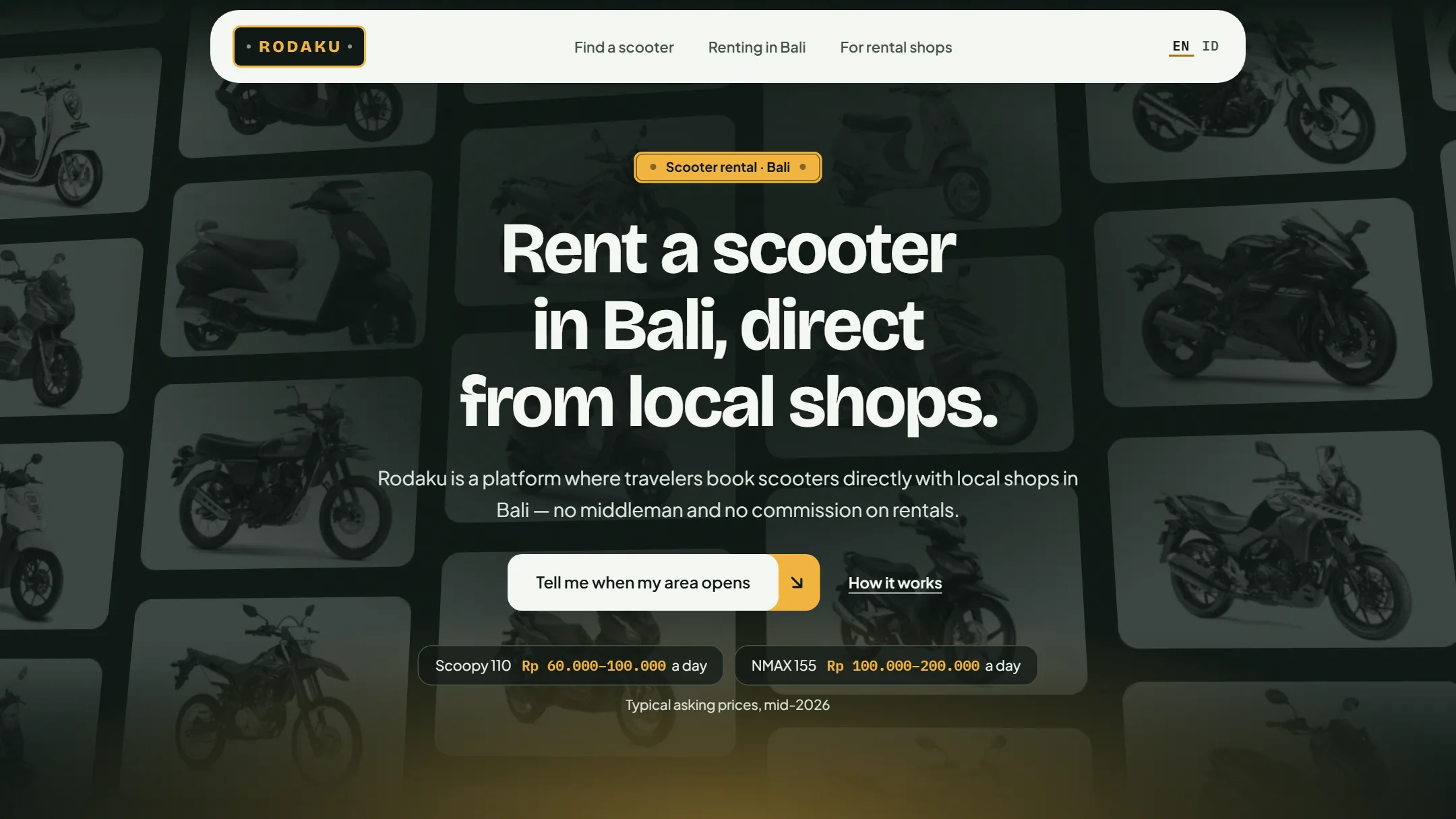
Rodaku
A scooter rental platform with no commission: a website for travellers and a phone app for the shops.
View the case →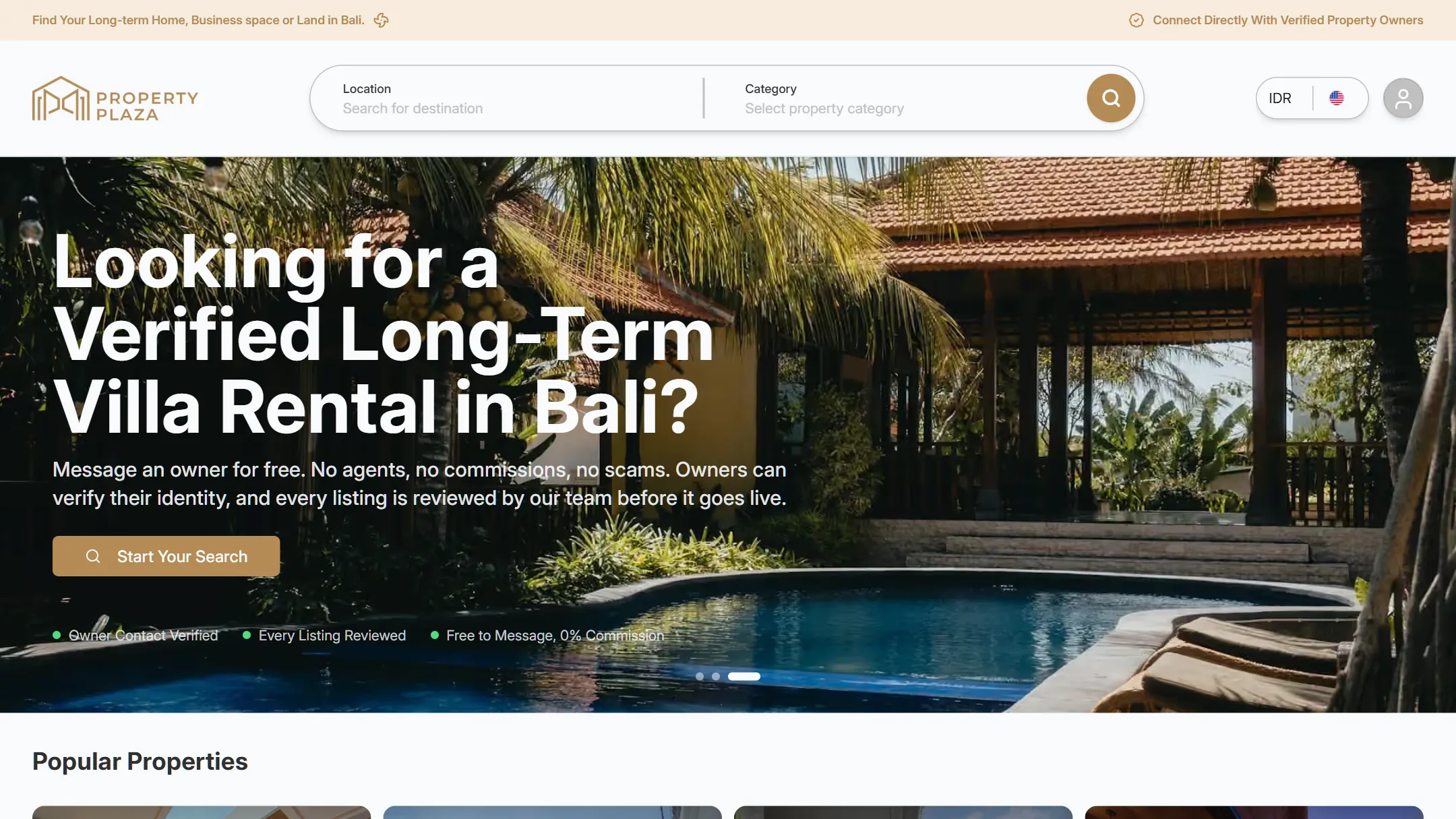
Property Plaza
A rental marketplace for Bali: a bilingual website for renters, a phone app for owners, and the API and back office behind both.
View the case →
Bali Business Base
A members-only directory, community board and marketplace, with dual payments and an AI prospecting engine.
View the case →
Bali Property Scout
A 7-agent AI pipeline that turns government zoning data into a defensible, risk-scored property report.
View the case →What does custom software cost?
The price depends on four things: how many processes and user roles are involved, how many systems need to connect, how many exceptions the software has to handle and whether existing data needs to be migrated.
An integration between two systems starts at €2,000 with me. The price mainly depends on the lead time. For a scoped internal system or portal, the Dutch market usually sees amounts between €5,000 and €20,000, and a multi-sided platform with an app goes well beyond that.
I don't start with a quote based on a wish list. The Process Scan is €995 fixed. After it you know what building costs before a line of code is written, and half of the scan is credited against the build.
Why I map the process first
I'm Ricardo Theijs. My background is process optimisation: an MSc with Business Process Management and years of process improvement at organisations such as UWV, Centric and G4S. Then I became an operator and built an e-commerce operation across several countries and channels myself.
Now I build the software myself too, full-stack and with AI agents. That combination is the point. Someone who only builds automates the mess. Someone who only advises leaves a report behind. I work remotely and async for companies in the Netherlands.
Frequently asked questions
What is custom software?
Software built around the processes of one company, instead of a package made for many companies at once. Often it does not replace your packages but adds a layer around them: integrations, a dashboard, a portal or an internal system that knows your exceptions.
How much does custom software cost?
An integration starts at €2,000, depending on the lead time. A scoped internal system or portal usually sits between €5,000 and €20,000, and a platform with an app goes well beyond that. The price depends on the number of processes, connected systems, exceptions and data migration. After a €995 Process Scan you know the price before anything is built.
Custom or off-the-shelf software: which fits my business?
Off-the-shelf fits when your process resembles that of most companies and the package covers most of it. Custom pays off when you need to connect in-house systems, when decisions need more than if-then rules, when data has to stay under your control, or when your team re-types data and works in Excel next to the package every day.
When does custom software pay off?
When the manual work around your packages costs more than the build. Count the hours per week spent re-typing, checking and merging data in Excel, and what errors and delays cost. If that is structural, a targeted integration or internal system usually pays for itself within a year.
What are examples of custom software?
An integration that pushes web shop orders into Exact Online automatically, a dashboard with the real margin per product and channel, a client portal showing order or project status, a planning system that replaces a shared spreadsheet, or a platform where customers and providers find each other, such as Rodaku.
Further reading
Building a system is the easy part
Knowing what to build is the work. The Process Scan shows where you lose time and money, what custom software would return and where a package is enough.
See the Process Scan