Inspection app + reports + client portal
Singo Trading
Container inspection, from WhatsApp, Excel and Word to one system. AI does the reading.
The problem
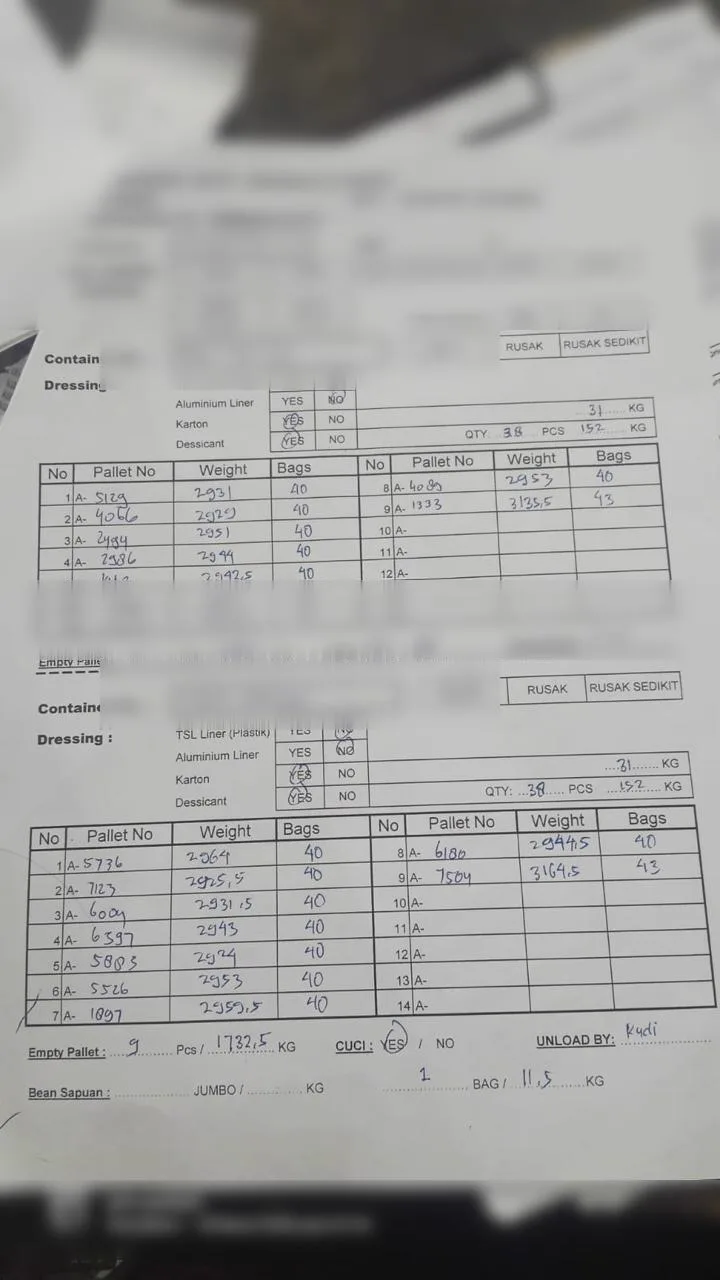
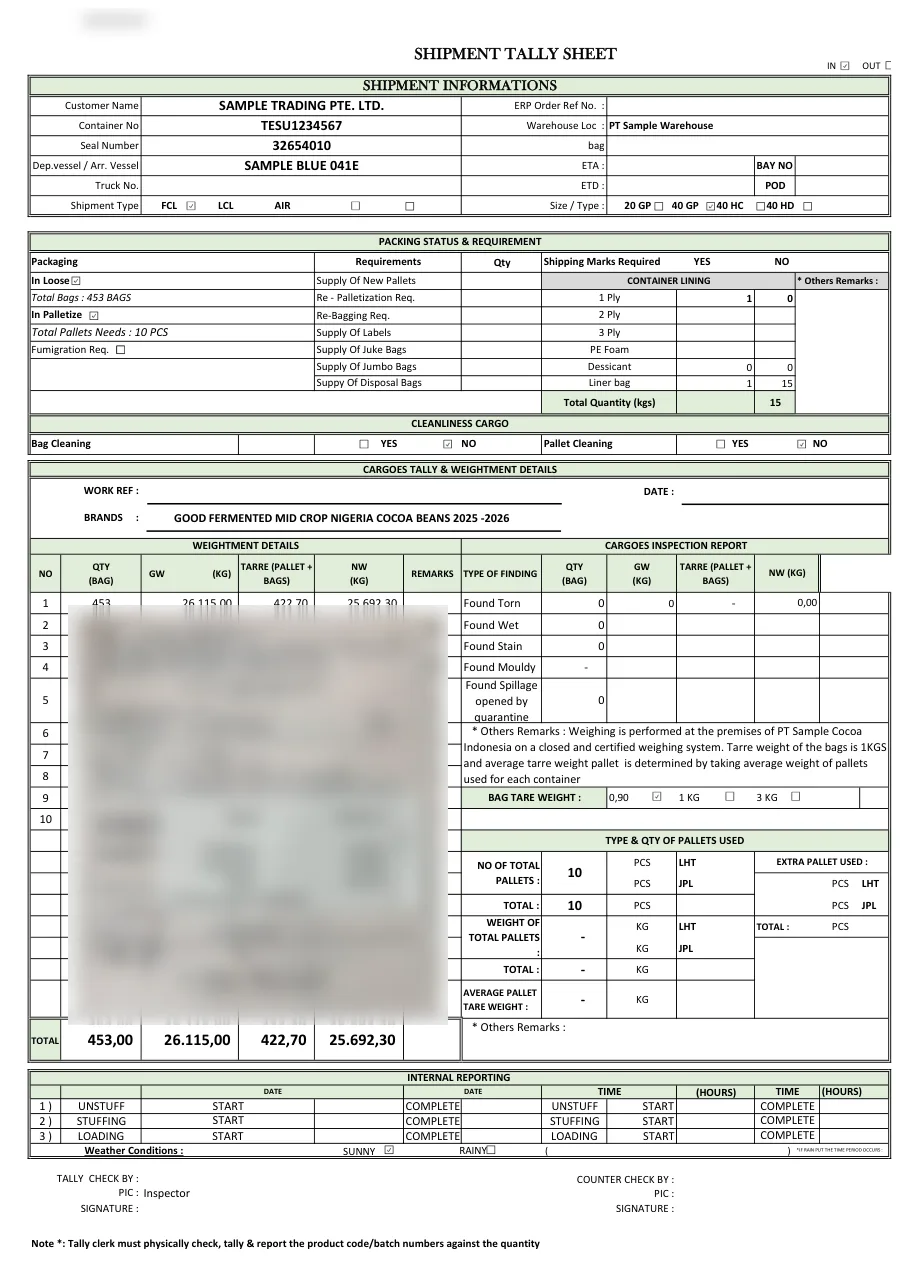
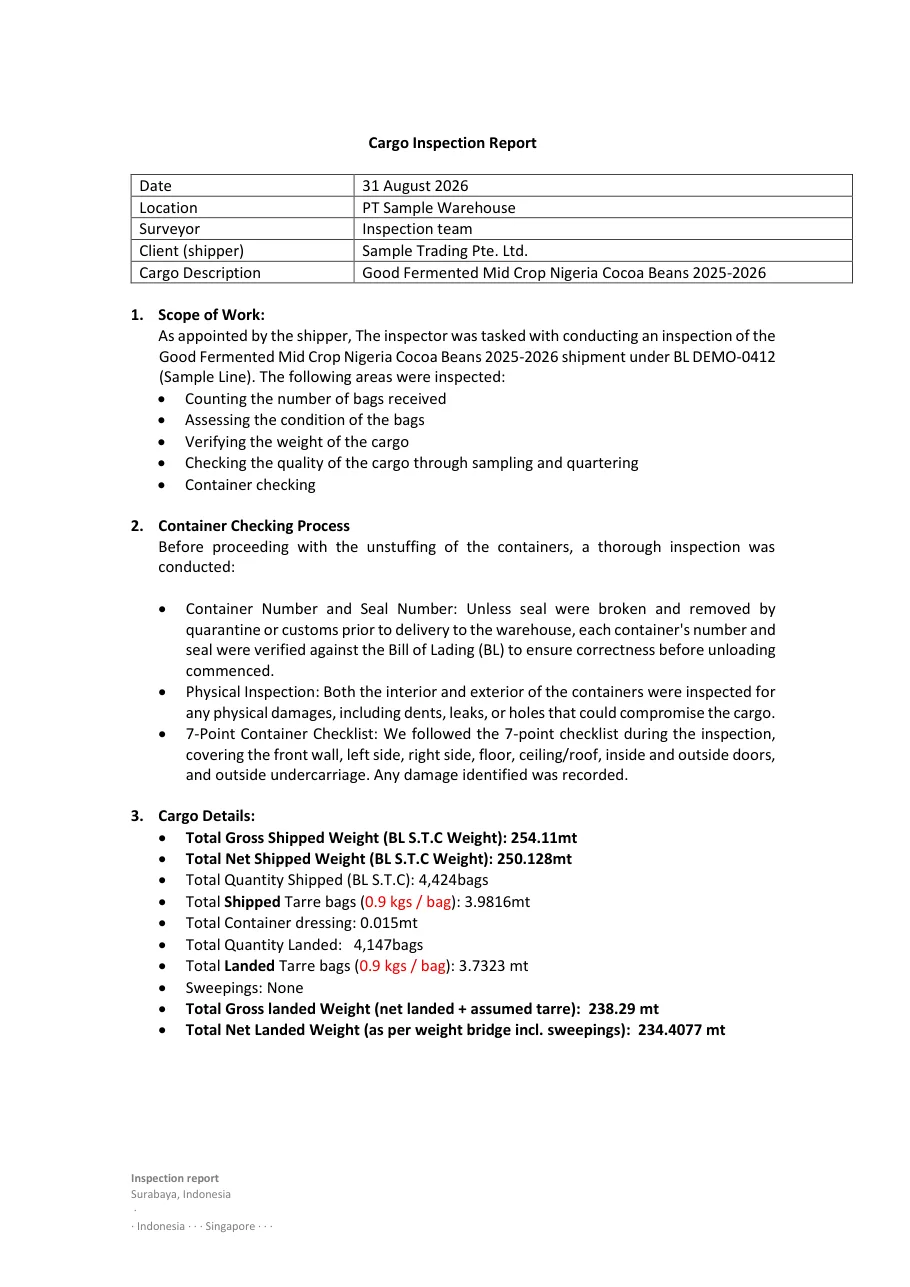
An inspection at Singo ran on three separate tools. The inspector sent photos and running counts to a WhatsApp group. In the office everything was retyped into a spreadsheet with one tab per container, and then the report was built by hand in Word, photo by photo. That works while everything adds up. When bags are missing or a seal has been replaced, the report has to carry a claim against a supplier or a carrier, and a photo without a time and place, or a formula that quietly broke, does not help.
What I built
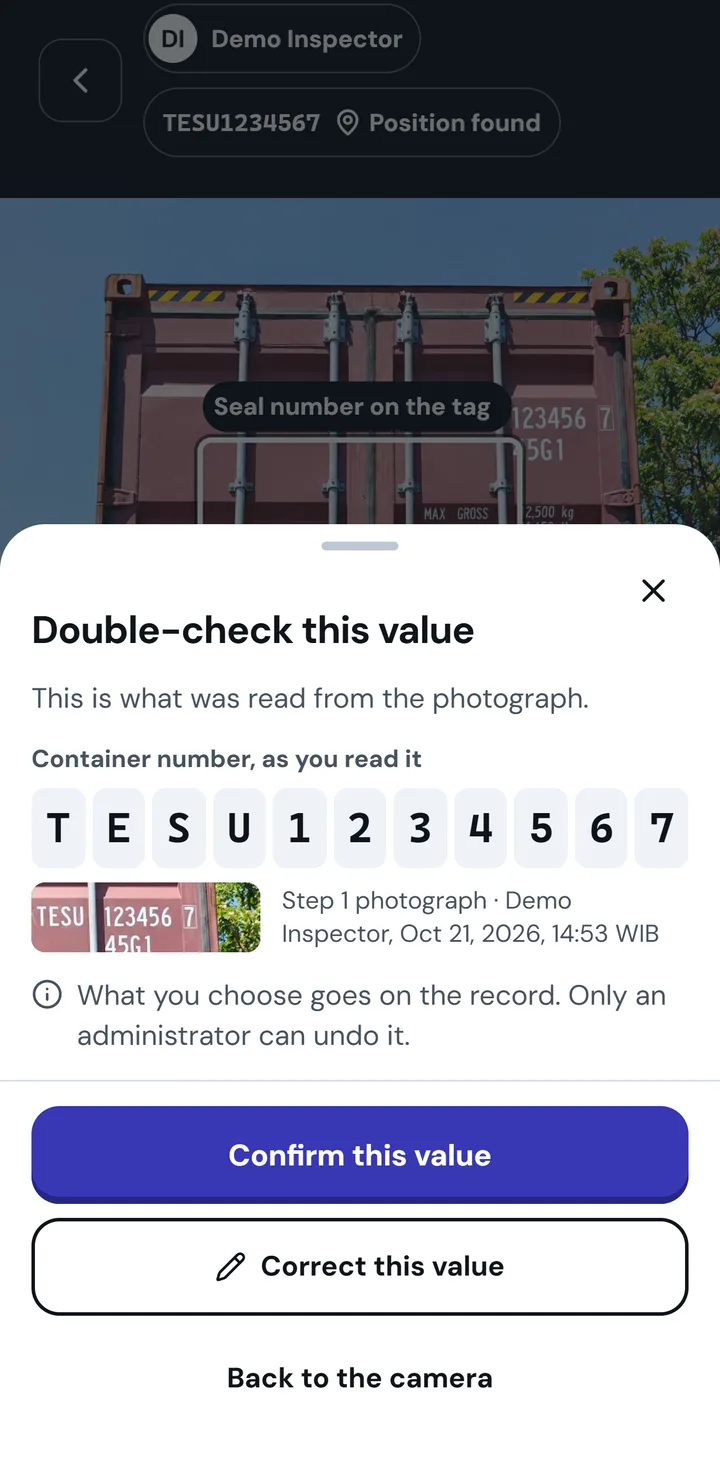
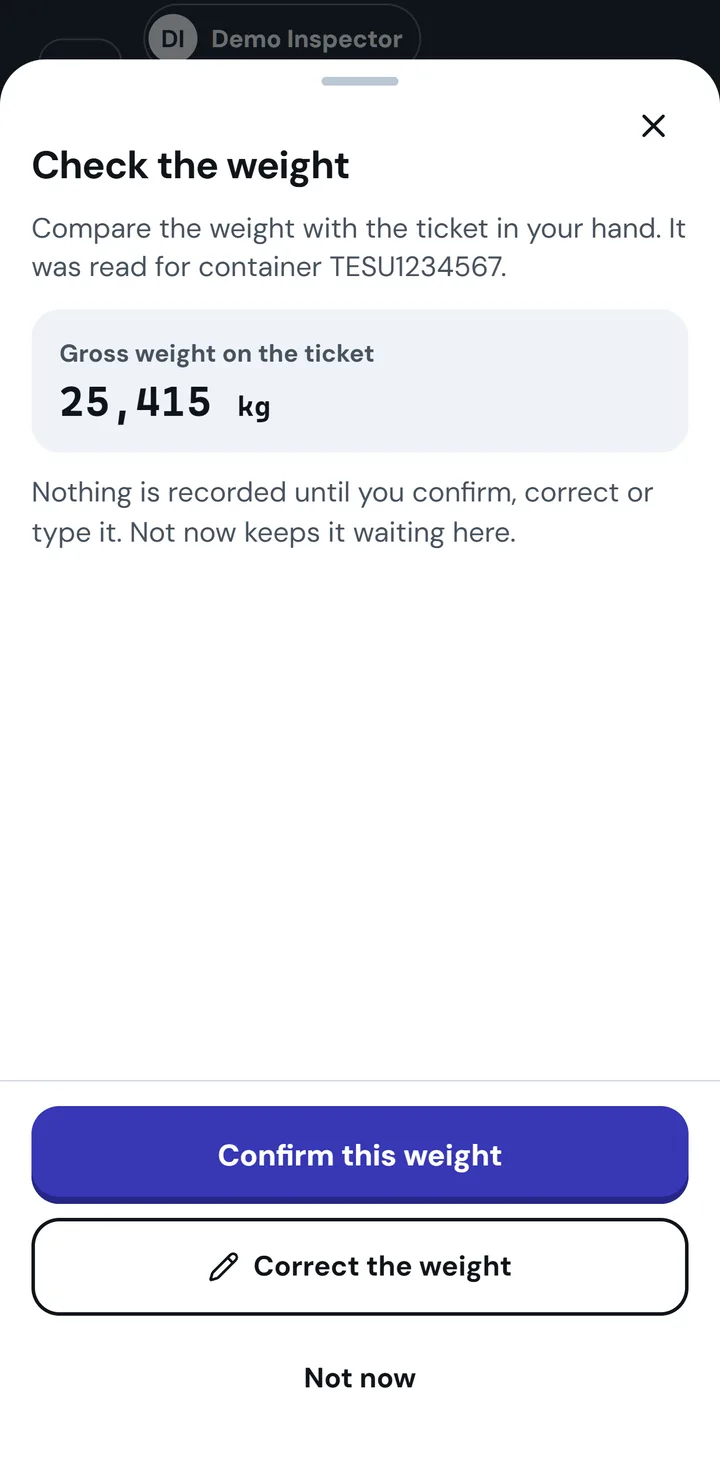
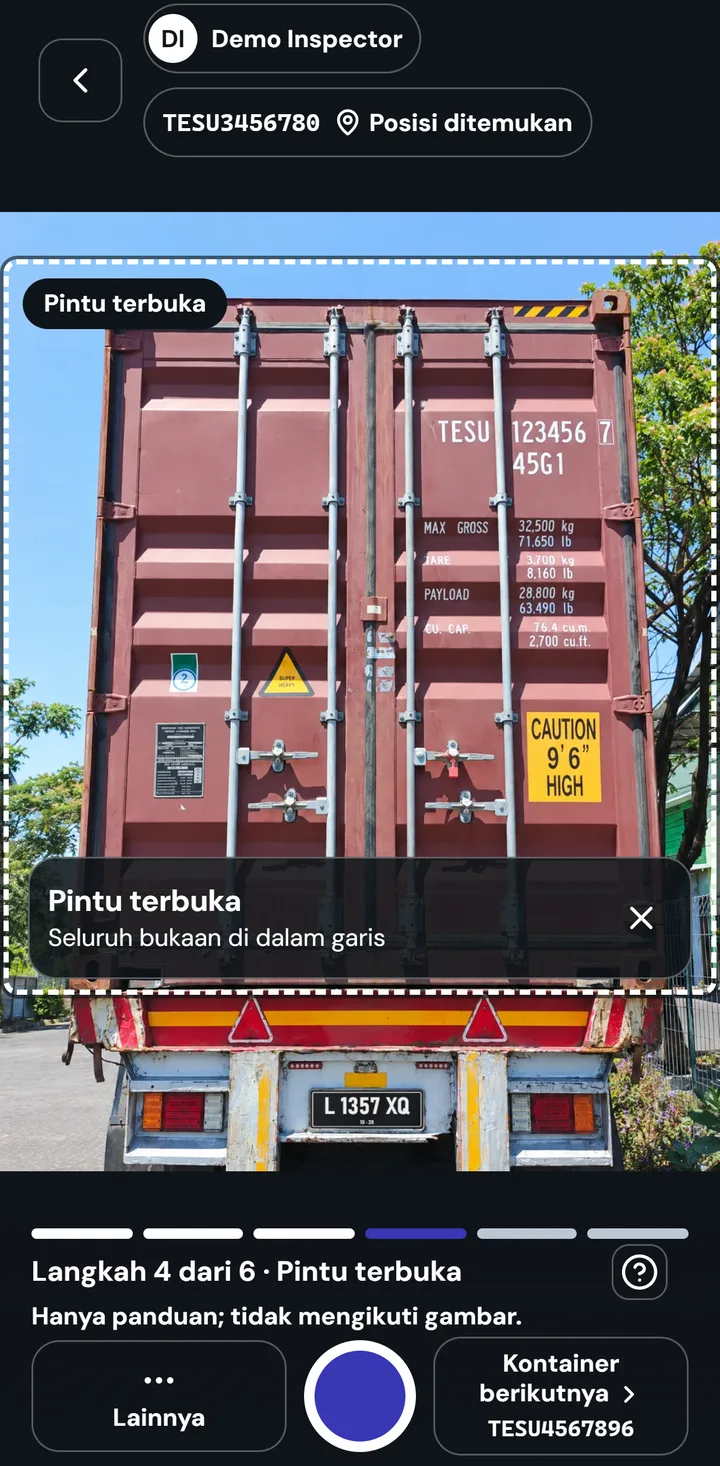
One system, from container to client. AI reads the Bill of Lading once, so nobody retypes it. On site the inspector works in an installable app, in English or Bahasa Indonesia: six fixed photos per container, the count, damage and the weighbridge ticket. AI reads the container number, trailer plate, seal and weight, rules check every reading against the B/L, and the inspector confirms. When the shipment closes, the system generates the reports, and the client downloads them from a portal on Singo's website.
Video · 1 minute
The old and the new process, side by side
The old and the new inspection process side by side: WhatsApp, Excel and Word, then one system where AI reads the Bill of Lading and the photos, the report builds itself and the client follows each shipment in a dashboard.
- 01.Before: WhatsApp, Excel and Word
- 02.AI reads the scanned Bill of Lading
- 03.Six photos per container, checked against the B/L
- 04.The report builds itself
- 05.The client follows every shipment in a dashboard
The documents in the video are anonymised. The app and the report run on sample data.
Read the transcript
Until recently, every container inspection at Singo ran on WhatsApp.
Tallies lived in Excel, one tab per container.
And every report was typed up by hand in Word.
Now? One system. And AI does the reading.
First, AI reads the scanned Bill of Lading: every container, seal and weight. Nobody retypes a thing.
On site, the inspector takes six fixed photos per container. AI reads the container number, the seal and the weighbridge ticket, and checks them against the Bill of Lading. The inspector just confirms.
When the shipment closes, the report builds itself, per container and per shipment. A seal that doesn't match is flagged, with the photo as evidence.
And the client follows every shipment in their own dashboard, and downloads the reports there.
AI does the reading. Rules do the checking. People handle the exceptions, and sign off the report.
The result? It scales. More shipments, not more manual work. Built by RNT Projects. Freight forwarders: still running on WhatsApp, Excel and Word? Let's talk.
Singo Trading & Services works with agricultural bulk goods that are imported into Indonesia and are then either exported again or not. For commodity traders it inspects containers of bagged cargo, such as cocoa, when they are unloaded. For a trader that report is evidence: it has to hold up in a claim. I redesigned the process and built the system behind it: an inspection app, automatic reports and a client portal. It runs in production at inspections in Indonesia, and the latest changes came straight from the inspectors' feedback.
What makes it notable
AI reads, rules check, people decide
The split is what makes it work. AI reads the scans and the photos. Fixed rules check what it read. People handle the exceptions and sign off the report. The AI never decides on its own whether a seal matches.
A Bill of Lading read once, from a scan
The B/Ls arrive as scans with no text layer. An LLM reads every container, seal and weight from them once, and the office confirms the result before the first truck arrives. When a document is unreadable, the model says so instead of guessing. Weighbridge tickets are read the same way, and the landed weight is compared with the B/L.
Every reading checked three times
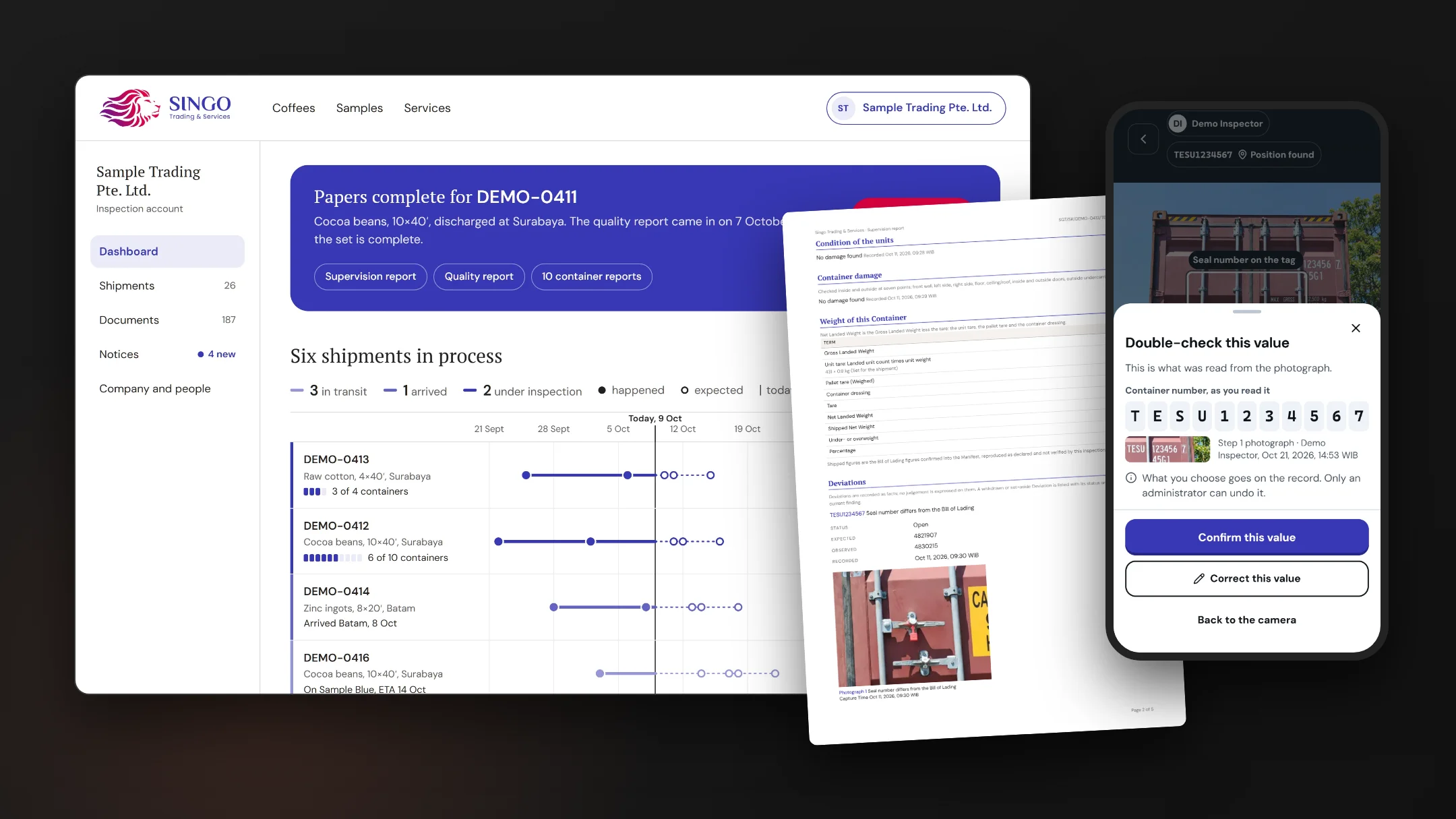
A container number read from a photo has to pass the ISO 6346 check digit, match a container on this shipment's B/L and be read with enough certainty. When it misses one, the app asks the inspector to confirm it, correct it or record a deviation.
Six photos that hold up as evidence
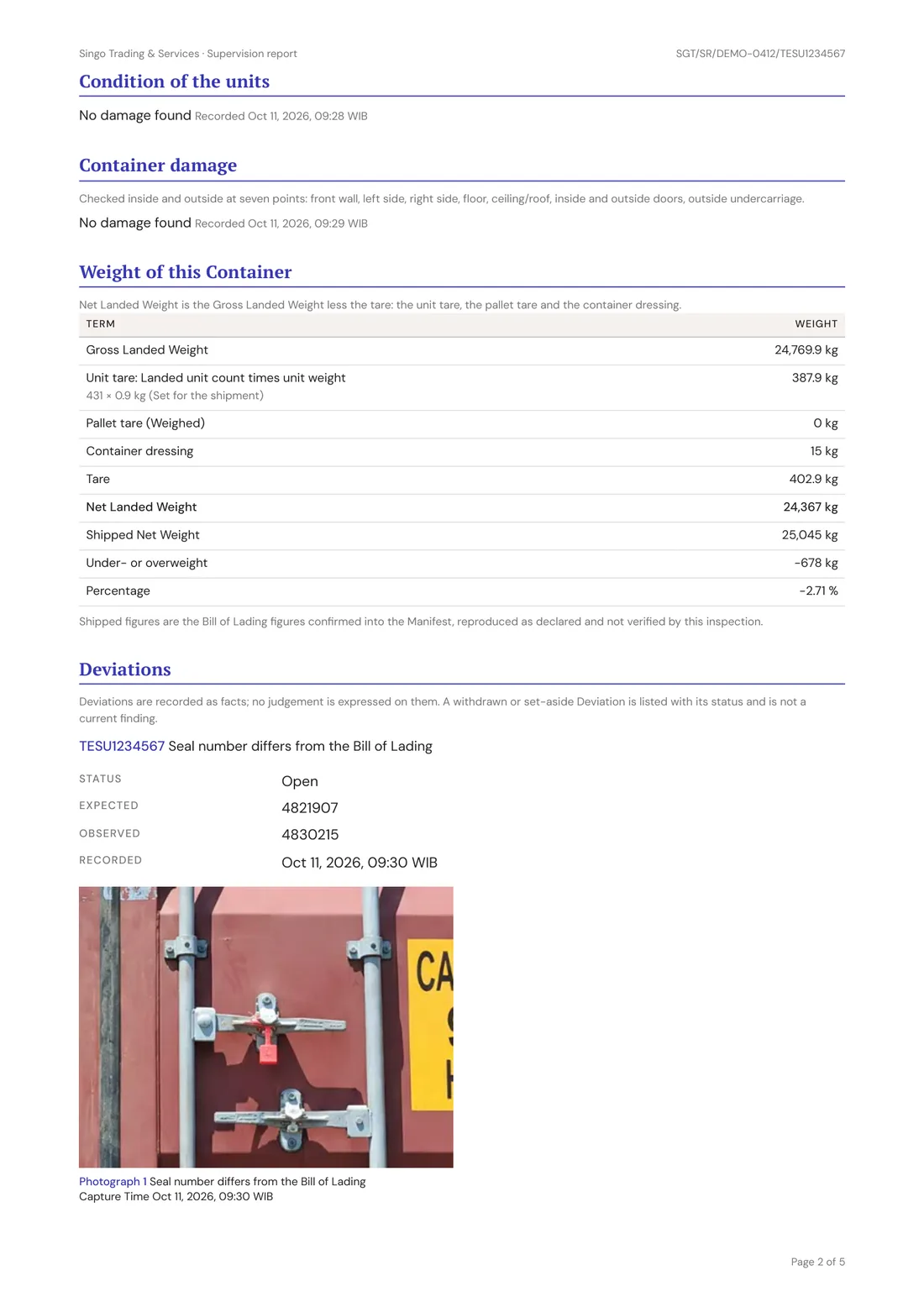
Every container gets the same six photos in the same order: on its trailer, the seal, doors half open, doors open, the load half out and the empty container. Each one carries its capture time and location, and none of it can be changed afterwards without it showing.
A report that builds itself, then stays put
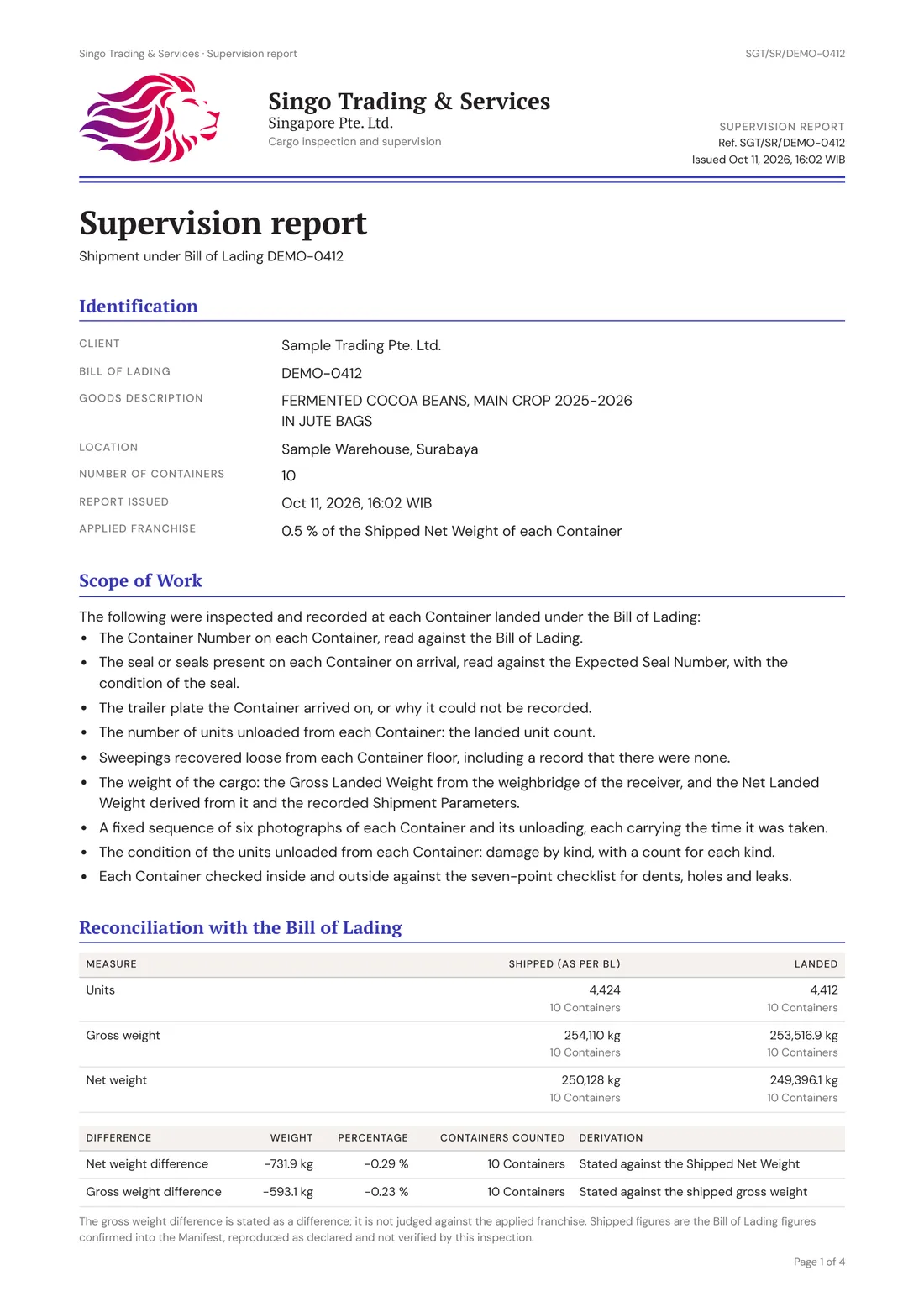
When the shipment closes, the system renders a PDF supervision report for every container and one for the shipment: seals, counts and weights against the B/L, and every deviation with its photo. Nobody types anything over. An issued report is final, and it goes straight to the client portal.
A portal instead of an email
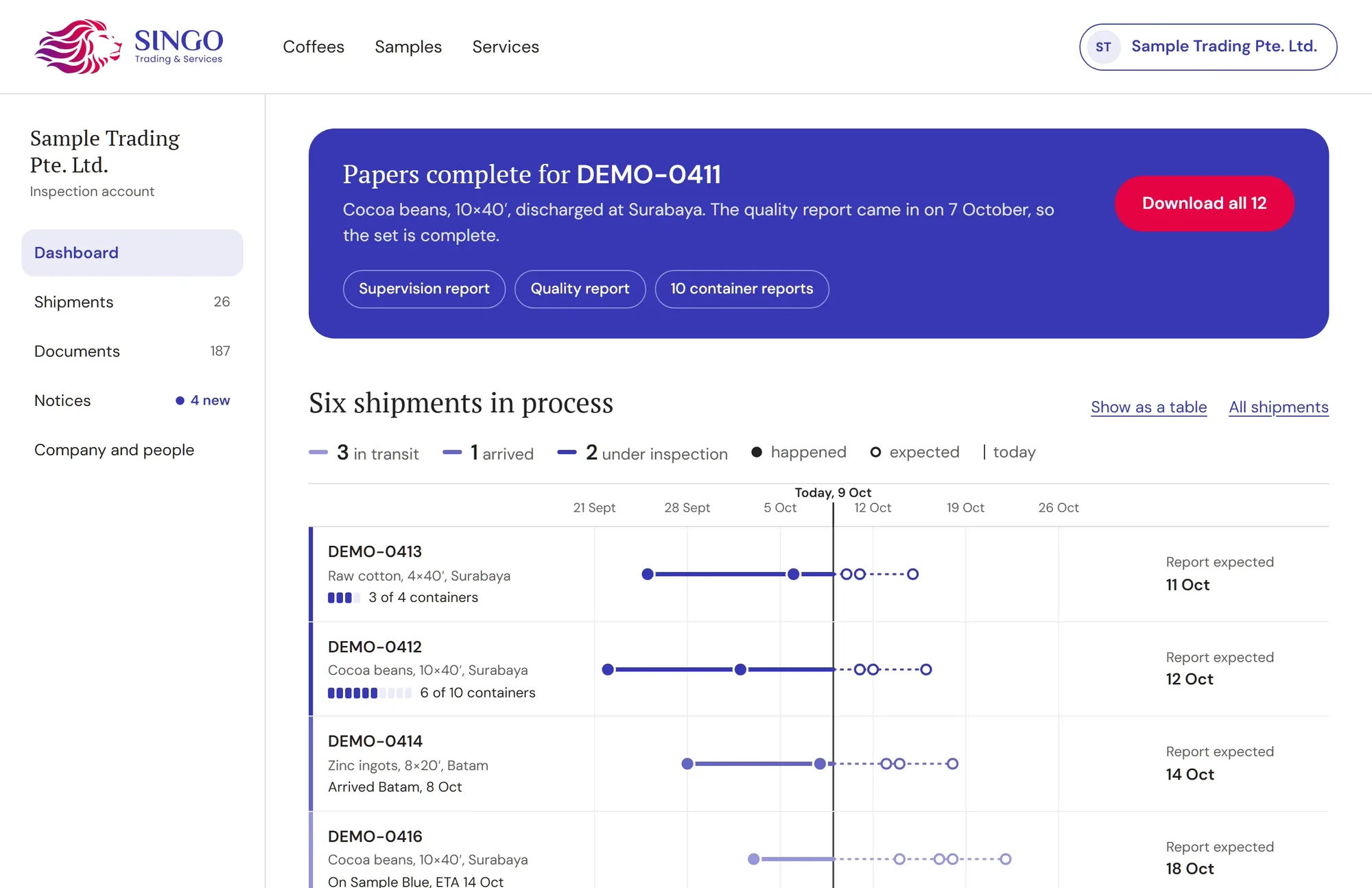
The client follows every shipment on Singo's website: in transit, arrived, under inspection, and when the report is expected. Documents can be searched by B/L, container, commodity or port and downloaded one by one or as a zip, and an email says when the reports are ready. The same website sells Singo's green coffee to cafés and roasters in Singapore.
Tech stack
- Next.js
- TypeScript
- Installable web app (PWA)
- Supabase
- PostgreSQL
- LLM (documents & photos)
- Rule-based checks
Gallery
Before: WhatsApp, Excel and Word
Anonymised: names and numbers are blurred.
The inspection app
Example data: a demo shipment and a demo inspector, not a live one.
The report
Sample data.
The client portal
Sample data: a demo client account.
Frequently asked questions
One system for container inspections: an app the inspector uses on site, reports that generate themselves per container and per shipment, and a portal on Singo's website where the client follows shipments and downloads the reports. It replaced a process that ran on WhatsApp, Excel and Word, and it is in production at inspections in Indonesia.